TL;DR:
- Solo lawyers can significantly improve client acquisition through targeted SEO strategies, especially local optimization and content creation. Building a consistent online presence with Google Business Profiles, FAQ videos, and technical site improvements offers long-term, measurable returns that surpass paid advertising. Most solo attorneys overlook their personal story and organic growth potential, which provides a competitive edge in local searches and AI citations.
SEO is the primary way solo lawyers get found by clients who are actively searching for legal help online. Without it, your website sits invisible while larger firms with bigger marketing budgets capture every search result above you. The good news: solo attorneys have a structural advantage in search that most never use.
Search engine optimization (SEO) is the recognized industry term for the process of improving your website’s visibility in Google and AI-powered search results. For solo practitioners, understanding why solo lawyers need SEO goes beyond rankings. It is about building a digital presence that works around the clock, converting strangers into consultations without you spending a dollar on ads.

Why solo lawyers need SEO: the core case
Solo attorneys operate without the marketing infrastructure that large firms take for granted. No in-house marketing team. No agency retainer. No brand recognition built over decades. SEO levels that playing field by putting your name in front of the right person at the exact moment they need a lawyer.
The SEO benefits for solo lawyers are concrete and measurable:
- Qualified traffic: People who find you through Google are already looking for legal help. They are not browsing casually. They have a problem and want to hire someone.
- Personal brand visibility: Unlike a firm website that promotes a collective, your SEO strategy can highlight your story, your specialty, and your track record. That specificity converts better.
- Video as a trust signal: Solo attorneys who build “Core 4” video content covering authority, case stories, process, and FAQs close 47% more cases by building trust before a prospect ever calls. That number reflects how much clients want to know who they are hiring before they commit.
- AI search citations: 20% of AI search responses already pull from YouTube videos. If you have a YouTube channel with well-optimized legal FAQ videos, AI tools like ChatGPT and Perplexity may cite your content directly.
- Long-term ROI: Organic SEO builds lasting web presence that compounds over time. A Google Ad stops the moment you stop paying. A well-ranked article or video keeps generating inquiries for years.
Pro Tip: Start your SEO with one well-optimized page answering the single most common question your clients ask. One strong page outperforms ten thin pages every time.
How does SEO compare to other marketing options for solo attorneys?
Solo attorney digital marketing typically involves three channels: SEO, paid ads, and social media. Each has a role, but they are not equal for a solo practice with limited time and budget.
| Strategy | Cost Over Time | Traffic Quality | Longevity | Best For |
|---|---|---|---|---|
| SEO | Low (after setup) | High intent | Permanent | Long-term client acquisition |
| Google Ads | High (ongoing) | High intent | Stops when paused | Fast leads, short campaigns |
| Social Media | Low to medium | Low to medium intent | Moderate | Brand awareness, referrals |
| YouTube SEO | Low (after creation) | High intent | Permanent | Trust building, AI citations |
Most solo lawyers waste budget on Google Ads without strategy, missing the SEO opportunities that their personal brand makes possible. Paid ads work for immediate visibility, but they require constant spend and offer no compounding return. Social media builds presence but rarely captures someone in the moment they need a lawyer.
SEO targets high-intent searches. When someone types “divorce attorney in Columbus Ohio” into Google, they are ready to hire. Ranking for that phrase puts you in front of a buyer, not a browser.
Pro Tip: Use Google Ads for 60–90 days to identify which search terms convert for your practice. Then build SEO content around those exact terms so you can eventually earn that traffic for free.
Which SEO techniques should solo lawyers prioritize?

Legal SEO strategies for solo practitioners fall into four categories. Work through them in order, since each one builds on the last.
1. local SEO and google business profile
Local SEO puts solo lawyers in front of clients searching in their geographic area at the exact moment they need help. This is the highest-return SEO activity for most solo attorneys.
Start with your Google Business Profile. A well-maintained profile increases clicks and inbound calls from local searchers. Fill in every field: practice areas, hours, service areas, photos, and a compelling description. Collect reviews consistently. Google’s local map pack rankings are heavily influenced by review volume and recency.
2. content that answers real legal questions
Write pages and blog posts that answer the questions your clients actually ask. “What happens if I miss a child support payment in Texas?” is a real search. A well-optimized page answering that question attracts a qualified reader who is already in a legal situation and looking for help.
Google Search Central recommends consistent production of valued content alongside technical best practices. That means publishing regularly, not just once. Aim for two to four new pages or posts per month at minimum.
3. video FAQ content for YouTube and AI search
Record short videos answering common client questions. Post them on YouTube with keyword-rich titles and descriptions. This serves two purposes: it builds trust with prospects who watch before calling, and it positions your content for AI citation. Since 20% of AI responses already pull from YouTube, video is now an SEO asset, not just a marketing extra.
4. technical SEO essentials
Your site needs to be fast, mobile-friendly, and technically clean. Google penalizes slow sites and rewards mobile responsiveness. Run a full SEO audit to identify broken links, missing metadata, and schema markup gaps. Schema markup tells Google and AI crawlers exactly what your page is about, which improves both rankings and AI citation rates.
Pro Tip: Use Google Search Console (free) to see which search queries are already bringing visitors to your site. Optimize those pages first. You are closer to ranking than you think.
What are the common SEO pitfalls solo lawyers should avoid?
Solo attorneys make predictable mistakes that stall their SEO results. Knowing them in advance saves months of wasted effort.
- Skipping personal branding. Your name, face, and story are your biggest differentiators. Generic firm-style content erases that advantage. Every page should reflect who you are and why clients should trust you specifically.
- Relying only on paid ads. Unstrategized ad spend often fails while well-executed SEO yields measurable returns. Ads without an organic foundation leave you vulnerable the moment your budget drops.
- Ignoring Google Business Profile. Many solo lawyers set it up once and forget it. Profiles with outdated information, no photos, and zero reviews rank poorly in local map pack results.
- Publishing generic content. Copying content from other law firm websites or publishing thin, vague articles does not rank. Google rewards original, specific answers to real questions.
- Not tracking results. Many solo lawyers do not measure SEO results, losing the insights needed to improve. Without data, you cannot tell what is working or where to focus next.
Pro Tip: Set a monthly 30-minute calendar block to review your Google Search Console data. Look at which pages gained or lost clicks and adjust your content accordingly.
How can solo lawyers measure and grow their SEO success?
Measuring SEO is not optional. It is the mechanism that turns guesswork into a repeatable client acquisition system. Here is a practical framework:
- Set up Google Search Console. This free tool from Google shows you which queries trigger your site, your average ranking position, and which pages earn the most clicks. Review it monthly.
- Track local map pack rankings. Monitor where you appear for your core practice area plus city searches. Tools like Google Business Profile Insights show call volume and direction requests.
- Monitor AI citation status. Ask ChatGPT and Perplexity “best [practice area] attorney in [your city]” once a month. Note whether your name appears and which competitors are cited instead.
- Audit your site quarterly. A technical audit catches issues before they hurt rankings. Check for broken links, slow page speed, missing schema, and outdated metadata.
- Scale content as you grow. Start with two to four pages per month. As your practice grows, increase output. Topical authority builds faster with consistent volume.
| Metric | Tool | Review Frequency |
|---|---|---|
| Search query performance | Google Search Console | Monthly |
| Local map pack position | Google Business Profile Insights | Monthly |
| AI citation mentions | ChatGPT, Perplexity manual checks | Monthly |
| Technical site health | SEO audit tool | Quarterly |
| Backlink profile | Google Search Console, audit tools | Quarterly |
The importance of SEO for lawyers compounds over time. A solo attorney who starts measuring today will have 12 months of data by next year, making every future decision faster and more accurate.
Key takeaways
Solo lawyers who invest in SEO build a client acquisition system that compounds in value over time, unlike paid ads that stop the moment spending stops.
| Point | Details |
|---|---|
| Local SEO is the highest priority | Optimize your Google Business Profile first to capture clients searching in your area. |
| Video content drives AI citations | YouTube FAQ videos get cited by ChatGPT and Perplexity, giving solo attorneys a visibility edge. |
| Personal branding outperforms generic content | Your name and story convert better than firm-style pages because clients hire people, not logos. |
| Measurement turns effort into results | Track Google Search Console and AI citation status monthly to know what is working. |
| SEO compounds where ads do not | Organic rankings and video content keep generating inquiries long after the initial investment. |
Solo lawyers have an SEO advantage most are not using
I have worked with enough solo practitioners to say this plainly: you have an asset that no large firm can replicate, and most of you are not using it. That asset is your personal story.
Big firms spend enormous budgets on brand advertising that is deliberately vague because they need to appeal to everyone. You do not. You can publish a video explaining exactly how you handled a specific type of case, in plain language, for a specific type of client. That specificity is what Google rewards and what clients respond to.
The attorneys I have seen win with SEO are not the ones with the biggest budgets. They are the ones who showed up consistently: one well-optimized page per week, one FAQ video per month, one Google Business Profile update per quarter. That cadence, held for 12 months, produces rankings that no ad campaign can match for the same cost.
The uncomfortable truth about solo attorney digital marketing is that most attorneys wait too long to start. They assume SEO takes years to show results. It does not, especially for local searches where competition is thinner than you expect. A well-optimized Google Business Profile alone can generate calls within weeks. Add a few targeted pages and a YouTube video, and you are ahead of 80% of your local competitors before you have spent a dollar on ads.
SEO is not a mystery. It is a discipline. And for solo lawyers, it is the most direct path from “invisible online” to “fully booked practice.”
— Cole
How Trystellor makes SEO manageable for solo lawyers
Running SEO alongside a full caseload is genuinely hard. Trystellor is built for exactly this situation.
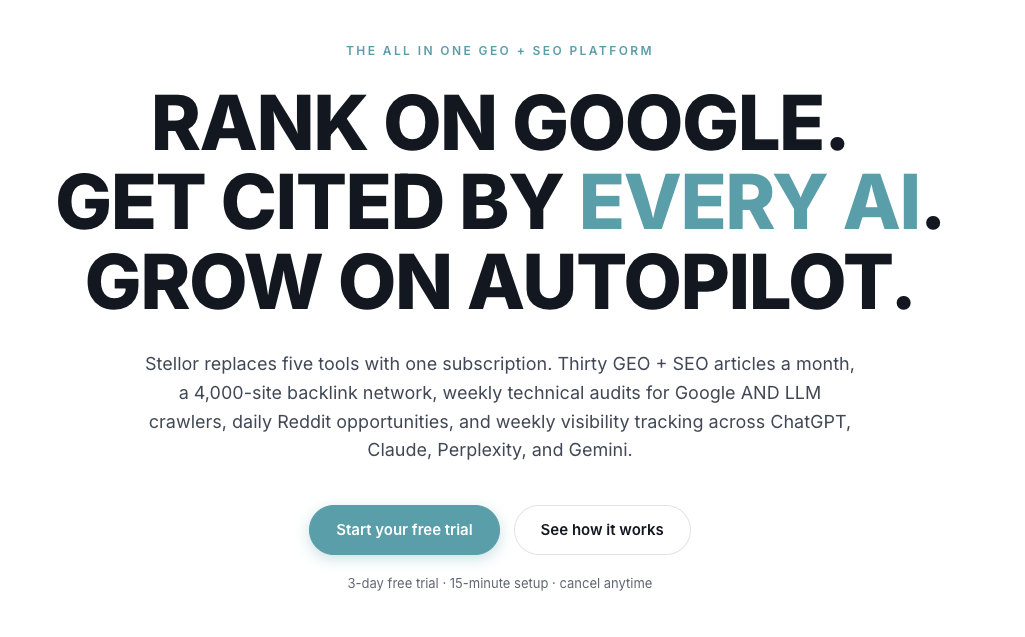
Trystellar’s GEO + SEO platform replaces five separate tools with one subscription at $199 per month. It publishes 30 optimized articles to your site every month, builds backlinks through a 4,000-site network, runs weekly technical audits, and tracks whether ChatGPT, Claude, Perplexity, and Gemini are citing your practice. The product features include a free AI Visibility Audit delivered within 48 hours of signup, showing you exactly which competitors are winning the AI answers you should be earning. No credit card required for the three-day trial. You keep all content even if you cancel.
FAQ
What is SEO and why does it matter for solo lawyers?
SEO is the process of improving your website’s visibility in Google and AI search results. For solo lawyers, it is the primary way to attract clients who are actively searching for legal help in your area.
How long does SEO take to show results for a solo attorney?
Local SEO improvements, especially Google Business Profile optimization, can generate calls within weeks. Broader content and ranking gains typically take three to six months of consistent effort.
Is video content really necessary for legal SEO?
Yes. Solo attorneys who use “Core 4” video content close 47% more cases by building trust before contact, and 20% of AI responses already pull from YouTube, making video a direct SEO asset.
Can solo lawyers do SEO without hiring an agency?
Yes. Google Search Console, Google Business Profile, and a consistent content schedule are free tools that produce real results. Platforms like Trystellor automate the heavy lifting for $199 per month if you want to scale faster.
What is the single most important SEO step for a solo lawyer starting out?
Claim and fully optimize your Google Business Profile. It is free, takes under two hours, and directly improves local search visibility for proximity-based searches where clients are ready to hire.