

An editorial backlink is a link a journalist, blogger, or publisher gives your site voluntarily, because your content, data, or expertise earned it, not because you paid for placement. It’s the single highest-value link type for both Google rankings and AI citations, since models like ChatGPT and Perplexity draw roughly 80–85% of their citations from earned media rather than paid or self-published content. The trade-off is real: editorial links take more time to earn than paid placements, but they last longer and carry more weight.
TL;DR:
- Editorial backlinks are the most valuable links for Google ranking and AI citations, with roughly 80-85% of AI model references originating from earned media.
- Strict editorial links are rare and independently found by publishers, while outreach-assisted links are more common, and paid links require disclosure to comply with guidelines.
- Editorial links last over two years at a 95% retention rate, making them more durable and valuable than paid placements, which often drop off after contract ends.
- Strategies like original data publishing, targeted journalist outreach, and link reclamation offer high ROI, while paid placements should only serve as a backup option.
- Tracking AI citations, referral traffic, and domain diversity are crucial KPIs, with tools like Stellor streamlining content, outreach, and monitoring efforts.
Table of Contents
- What Counts as an Editorial Backlink (and What Doesn’t)
- Why Editorial Backlinks Still Move the Needle in 2026
- Proven Tactics to Earn Editorial Backlinks, Ranked by ROI
- How to Plan and Run an Editorial Link Campaign
- Measuring ROI: KPIs That Actually Tell You Something
- Where Stellor Fits Into This Playbook
- What I’ve Learned Watching Link Campaigns Succeed and Fail
- Try Stellor Instead of Juggling Five Separate Tools
- Sources
- FAQ
What Counts as an Editorial Backlink (and What Doesn’t)
Not every link labeled “editorial” is created equal, and the differences matter for both compliance and strategy.
- Strict editorial links: An editor or writer finds your content, tool, or data independently and links to it without any pitch from you. These are the gold standard and the hardest to manufacture.
- Outreach-assisted editorial links: You pitch a journalist or blogger, but the publisher still makes an independent editorial decision on whether and how to link. This is where most real campaigns live.
- Sponsored guest posts and niche edits: You pay for placement or insertion into existing content. Google’s link spam guidelines require these to carry
rel="sponsored"ornofollowtags, and skipping disclosure risks a manual action. - Dofollow vs. nofollow: Dofollow links pass ranking equity directly. Nofollow links still matter because AI models read unlinked mentions and topical context as credibility signals, even without passing PageRank.
Why Editorial Backlinks Still Move the Needle in 2026
The numbers tell a clear story: earned media dominates what AI models cite. Industry analysis of citation patterns across ChatGPT, Claude, and Gemini found that roughly 80–85% of AI citations trace back to earned media, meaning journalism, research, and third-party editorial coverage, not brand-published blog posts or paid placements.
Editorial links stay live at a 95%+ rate after 24 months, compared to 75 to 85% for paid placements, according to a 2026 industry review of link durability and equity.
That durability compounds. A paid placement that gets pulled after a contract ends stops sending referral traffic and stops feeding AI crawlers new signal. An editorial mention on a publication with an established audience keeps working for you long after the pitch is forgotten. Topical relevance also beats raw Domain Rating here: ten unique referring domains in your niche outperform dozens of links from one generic high-authority site, because both Google and LLMs weigh diversity and subject match over sheer link volume.
Proven Tactics to Earn Editorial Backlinks, Ranked by ROI
Not every tactic deserves equal investment. Here’s how to prioritize based on typical scale and payoff.
- Journalist-request platforms. Services built around reporter queries (the HARO-style model) let you respond directly to writers actively looking for sources. Speed and specificity win here. A vague, promotional pitch gets ignored; a two-sentence answer with a concrete number gets quoted.
- Manual outreach to niche publishers. Slower than PR blasts, but far more targeted. You’re building a relationship with one editor who covers your exact space, which pays off on future stories too.
- Guest contributions framed as expertise. A byline on a respected trade publication reads as editorial when the outlet retains full control over headline, edits, and whether to run it at all.
- Paid placements as a fallback. When timelines are tight, disclosed sponsored content fills gaps, but treat it as a supplement, not a substitute, for earned coverage.
Pro Tip: Set up a Google Alert or a mention-tracking tool for your brand name today. Half of link reclamation opportunities sit in mentions you don’t even know exist.
How to Plan and Run an Editorial Link Campaign
Treat editorial outreach like any other marketing function: set goals before you send a single pitch. For helpful advice on improving your interiors, see these home decoration tips.
- Define the target metric first. Are you chasing AI citation frequency, keyword rank movement, or referral traffic? Each goal changes which publishers you prioritize.
- Build a prospecting checklist. Screen for topical fit, real organic traffic (not just a high DR score), the type of placement typically run, and how the outlet discloses sponsored content.
- Structure every pitch around the reader’s benefit first. Lead with why the story matters now, back it with data, and attach ready-to-use assets like charts or quotes.
- Set realistic cadence expectations. A steady outreach effort typically produces the first placements in 4 to 12 weeks, with a dedicated person landing roughly one to three quality placements per month once the pipeline matures.
- Budget accordingly. Internal outreach costs staff time; paid fallback placements run from low three figures to several thousand dollars depending on the outlet’s authority and audience size.
Measuring ROI: KPIs That Actually Tell You Something
Vanity metrics like total link count won’t tell you whether a campaign worked. Track these instead:
- Target-page rank changes for the keywords the linked content supports.
- Referral traffic in GA4, segmented by source, to see which placements actually send readers.
- Unique referring domains, not total link count, since domain diversity is what both Google and AI models reward.
- AI citation checks: run the same buyer query in ChatGPT, Perplexity, and Claude before and after a placement lands, and note whether your brand or content shows up in the answer.
- Unlinked brand mentions and press pickup, which often precede a link and signal growing topical authority.
Check AI citations weekly since results shift fast, but wait for at least a full month of rank and referral data before judging a placement’s real impact. A single placement moving one keyword is noise; five placements in the same topic cluster moving a cluster of rankings is a trend. If your anchor text profile leans heavily on exact-match commercial phrases, that’s a red flag worth fixing before it looks manipulative to Google’s spam systems.
Where Stellor Fits Into This Playbook
Every step above, prospecting, pitching, monitoring, reporting, is a real job that eats hours every week. Stellor was built to compress that workload: it publishes 30 GEO and SEO-optimized articles a month to feed the content that earns coverage, routes placements through a vetted 4,000-site backlink network, instead of cold outreach alone, runs weekly technical audits, and tracks citations across ChatGPT, Claude, Perplexity, and Gemini so you’re not manually querying each model by hand.
The fastest way to test whether editorial coverage actually moves AI visibility is to run a citation check on your target query before a placement lands, then again two weeks after. That before-and-after snapshot is the single clearest signal a campaign is working.
Each Stellor feature maps to a stage in the campaign plan above: content creation feeds digital PR assets, the backlink network handles discovery and placement, and the audit and tracking layers replace the manual reporting spreadsheet.
What I’ve Learned Watching Link Campaigns Succeed and Fail
The biggest mistake I see is chasing Domain Rating scores instead of topical fit. A DR-70 site in an unrelated niche does less for your AI citation odds than a DR-30 trade publication your exact buyer reads. The second mistake is over-optimized anchor text. Editorial links read naturally when the anchor is a brand name or a plain description, not a keyword you’re trying to rank for. Run small, measured experiments, pitch three different publication types and check which ones actually get cited by AI, before scaling any single tactic.
— Cole
Try Stellor Instead of Juggling Five Separate Tools
Most teams cobble together a content writer, a backlink service, an audit tool, and a separate AI tracking dashboard just to run the campaign described above. Stellor is the alternative to that five-vendor stack for editorial link building: a single subscription that publishes articles monthly, runs backlink outreach through a large network, audits your technical SEO weekly, and checks your AI citation status across ChatGPT, Claude, Perplexity, and Gemini every week.
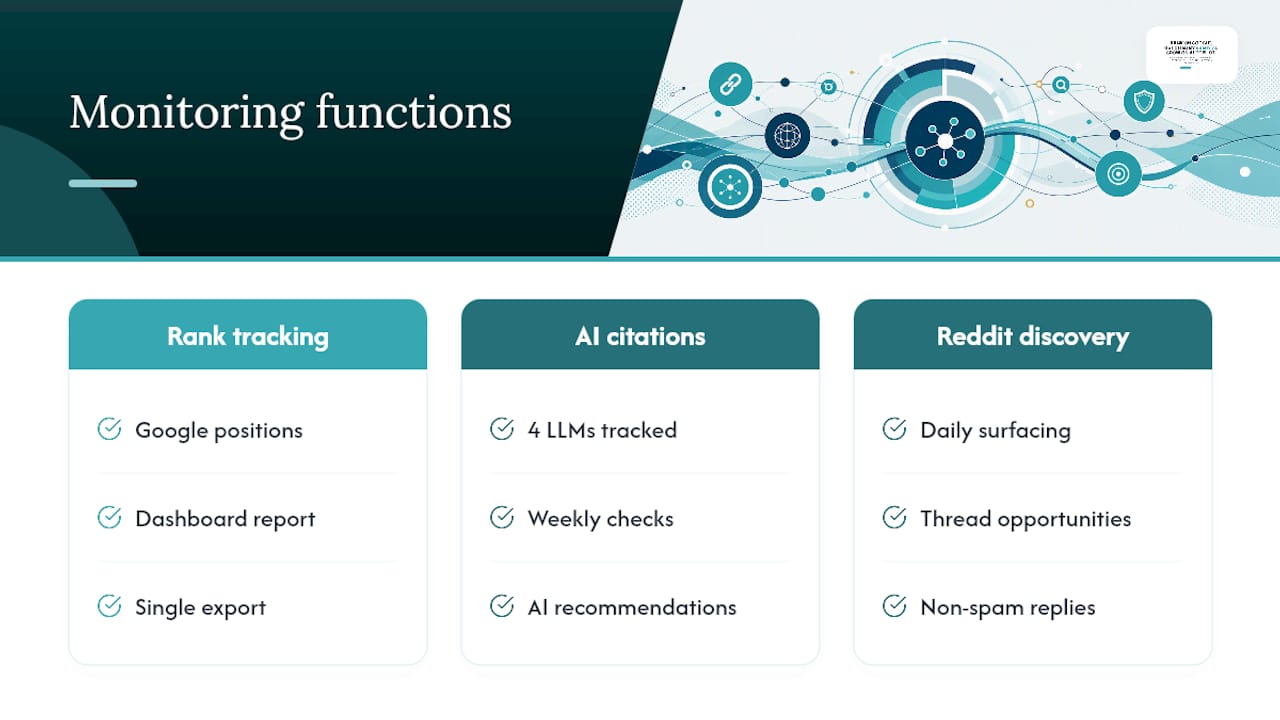
That last piece is what most SEO stacks miss entirely. Rank tracking tells you where you stand on Google. AI citation tracking tells you whether ChatGPT is actually recommending you when a buyer asks. Stellor reports both from one dashboard, so you’re not stitching together three exports to answer a simple question. Reddit opportunity discovery runs daily too, surfacing threads where a genuine, non-spammy reply can build the same kind of topical presence that earns editorial mentions over time.
Start a 3-day free trial, no card required, and run the before and after AI citation check described above on your own site before committing to anything.
Sources
- How AI search is reshaping link building strategy in 2026 — Search Engine Land
- Editorial Backlinks Explained: The 2026 Honest Guide — Serpbays
FAQ
Are Backlinks Still Relevant in 2026?
Yes. Backlinks remain a core Google ranking factor, and earned editorial links now carry added weight as a primary source AI models cite when generating answers.
What Are the Three Main Types of Backlinks?
The three broad categories are strict editorial links (unpaid, editor-chosen), outreach-assisted editorial links (pitched but independently decided), and paid or sponsored links (which require disclosure tags like rel="sponsored").
Can You Give an Example of an Editorial Backlink?
A trade publication citing your original industry survey in a news article, without you paying for the placement, is a textbook editorial backlink.
Are Backlinks Good or Bad for SEO?
Backlinks are good when earned naturally through relevant, valuable content; they become risky only when bought or manipulated in bulk without disclosure, which violates Google’s spam policies.
How Long Does It Take to Get Editorial Backlinks?
Most outreach campaigns land their first placements within 4 to 12 weeks, with a mature pipeline producing roughly one to three quality placements per month per dedicated outreach effort.
Does Stellor Help With Editorial Backlinks Specifically?
Stellor routes placements through a vetted 4,000-site backlink network and tracks the resulting AI citation impact weekly, replacing manual outreach tracking and separate citation-checking tools.