
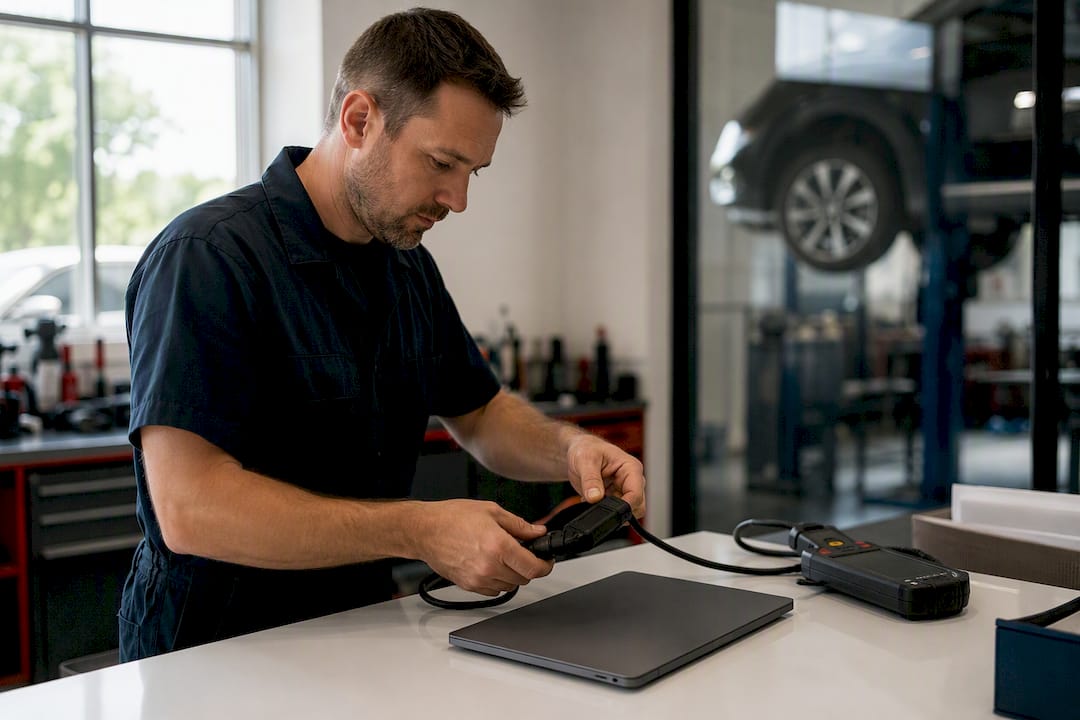
Auto repair SEO works by combining a fully optimized Google Business Profile with dedicated service pages, then backing both with reviews and technical fixes so Google trusts your shop over the ten others in your zip code, highlighting the benefits of local marketing for small business owners. The single best first move is finishing your Google Business Profile and publishing three service pages this week. Expect the first measurable movement on low-competition local phrases in 30 to 60 days, not overnight.
TL;DR:
- Completing your Google Business Profile and publishing three dedicated service pages should be your immediate focus to see local ranking improvements within 30 to 60 days.
- Building specific, keyword-optimized service pages for each core repair category and symptom reduces competition and attracts higher-converting local searches.
- Prioritizing review collection immediately after service delivery and responding promptly enhances local ranking signals and builds customer trust.
- Addressing technical SEO issues like mobile speed, schema markup, and crawlability is essential, as these quietly limit your visibility without obvious signs.
- Using a managed platform like Stellor can accelerate progress by automating content, backlinks, technical maintenance, and AI citation tracking within a 90-day window.
Table of Contents
- What Does Auto Repair SEO Actually Involve?
- Your 30 to 60 Day Action Checklist
- Which Keywords and Service Pages Should You Build First?
- How Do You Structure Content So Google and Customers Both Trust You?
- How Do You Optimize Google Business Profile for Local Rankings?
- What Technical SEO Fixes Matter Most for Auto Shops?
- How Many Reviews Do You Need, and How Often?
- What Tools Should You Use to Track Progress?
- How Long Until Auto Repair SEO Actually Works?
- Why a Managed GEO + SEO Platform Speeds This Up
- Get a Free AI Visibility Audit From Stellor
- A Mechanic’s-Eye View on Priorities
- Sources
- FAQ
What Does Auto Repair SEO Actually Involve?
Auto repair SEO is the process of getting your shop’s website and Google Business Profile to rank for the searches real customers type when their car breaks. That includes phrases like “brake repair near me,” “check engine light diagnostic,” and city-specific service terms. It sits at the intersection of local SEO for mechanics and standard on-page optimization, but the mix skews heavily local because almost nobody drives across town for an oil change when three shops sit closer.
Most owners think SEO means blogging about car maintenance tips. It doesn’t. The bulk of the work is structural: a complete Google Business Profile, service pages built around actual buyer intent, clean technical performance, and a steady flow of recent reviews. Get those four things right and you outrank shops that have been in business twice as long but never touched their website. Google’s own helpful content guidance backs this up: it rewards pages written to answer a real customer question, not pages stuffed with generic keyword phrases.
If you want a broader primer on how this plays out across service businesses generally, SEO strategies for local services covers the fundamentals that apply beyond auto repair too.
Your 30 to 60 Day Action Checklist
You don’t need a consultant to start. You need a weekend and a checklist.
- Complete your Google Business Profile (2 to 3 hours). Fill every field, choose a specific primary category like “Auto Repair Shop” instead of the vague “Automotive,” list every service you offer, and upload real photos of your bays and team.
- Build three service pages for your highest-margin services (one weekend). Start with brakes, diagnostics, or transmission work, whichever brings in the most revenue per ticket.
- Launch a review request workflow. Text customers a direct review link the moment they pay at the counter.
- Test your mobile speed with PageSpeed Insights and fix the worst offenders.
- Add schema markup for LocalBusiness and AutoRepair to your homepage and service pages.
Pro Tip: Do the Google Business Profile first, even before the service pages. It’s the fastest lever you have, and Google often reflects profile changes in local results within days, while new pages take weeks to get crawled and indexed.
Which Keywords and Service Pages Should You Build First?
Every core service needs its own page. Not a paragraph on a shared “Services” page, its own URL with its own title tag, its own content. Shops that build one dedicated page per service consistently outperform shops running a single aggregated services page, because Google can match a specific page to a specific search far more precisely than it can match a paragraph buried in a list.
Start by mapping your services to keyword clusters:
- Core service pages: brake repair, transmission service, engine diagnostics, oil changes, alignment.
- Symptom modifiers: “grinding noise when braking,” “car shaking at highway speed,” “check engine light won’t turn off.”
- Vehicle-specific modifiers: “check engine light Honda Civic,” “transmission repair Ford F-150.”
Symptom-based pages deserve special attention. A driver searching “squealing when I brake” is often closer to booking than someone searching the generic term “brake repair,” because symptom pages capture intent at the exact moment of concern rather than during general research.
A solid service page follows a repeatable blueprint: a title tag like “Brake Repair in [Your City] | [Shop Name],” an H1 that mirrors it, an opening paragraph naming who you serve and what makes you qualified, a stated pricing range, a plain-English breakdown of your process, and a clear call to action with your phone number and booking link. Skip the pricing range and you lose visitors who are comparison shopping before they ever call.

Prioritize keyword phrases with low competition and high buyer intent over broad national terms you’ll never rank for against national chains. “Transmission fluid leak repair [city]” will convert far more reliably than chasing “car repair.”
How Do You Structure Content So Google and Customers Both Trust You?
Not every page on your site serves the same purpose, and treating them all the same is a common mistake in digital marketing for auto repair. Service pages target someone ready to book. Symptom pages catch someone still diagnosing their problem. Informational pages, like maintenance schedules or seasonal tips, build topical depth and catch earlier-stage searches.
Connect them with a hub-and-spoke internal linking structure: your main services page acts as the hub, linking out to each individual service page, and each service page links back up and sideways to related symptom or informational content. This passes authority where it matters most and helps Google understand your site’s structure.
Every service page should carry the same trust signals:
- ASE certifications or manufacturer training, if you have them.
- A stated pricing range, not “call for a quote.”
- Warranty terms in plain language.
- Real photos of your shop, not stock images.
- A visible call to action above the fold.
Pro Tip: Avoid the templated trap. If your brake page and transmission page read identically with the service name swapped, Google notices, and so do customers. Include unique details on each page: actual turnaround time, common vehicle makes you service, and the specific steps your techs follow.
How Do You Optimize Google Business Profile for Local Rankings?
Your Google Business Profile carries more weight for local SEO for mechanics than almost anything else you’ll touch. It’s the first thing a searcher sees, and it’s the primary input for the Map Pack, the three-listing block that appears above organic results for “auto repair near me” searches.
- Choose your primary category carefully. “Auto Repair Shop” beats generic “Automotive” for most independent shops; add secondary categories for specialties like “Brake Shop” or “Transmission Shop.”
- Complete every field, including your name, address, phone number, hours, listed services, and a direct booking or scheduling link.
- Build a review request habit. Text a direct review link at the moment of vehicle handoff, when satisfaction is highest and the request feels natural.
- Respond to every review, positive and negative, within a day or two.
- Use weekly GBP features: publish a post, seed a Q&A with a question customers actually ask, and upload new photos from recent jobs.
For a full walkthrough of profile fields and what to fill in first, auto shop Google Business Profile tips breaks down the setup in more detail. One caution worth flagging: using a toll-free 800 number on your profile or website can quietly work against you, since local area codes signal geographic relevance that toll-free numbers don’t carry.
What Technical SEO Fixes Matter Most for Auto Shops?
Technical problems don’t announce themselves, they just quietly cap your rankings. Fix these first.
- Mobile speed. Mobile devices account for a large majority of website traffic, so a slow mobile site is costing you calls right now. Run your homepage and top service pages through PageSpeed Insights and fix the flagged issues: compress images, enable browser caching, and eliminate render-blocking scripts.
- Schema markup. Add LocalBusiness and AutoRepair structured data to your homepage, and service-specific schema to each service page. This helps Google understand what you offer without guessing.
- Sitemaps and crawlability. Submit an updated XML sitemap so Google reliably finds and indexes new service pages.
- HTTPS and duplicate content. Confirm your site runs on HTTPS and that you don’t have duplicate URLs competing against each other for the same keyword.
By the numbers: Since mobile traffic makes up the majority share of visits to most business websites, a mobile PageSpeed score under 50 isn’t a minor annoyance. It’s likely costing you a meaningful share of potential callers before they ever see your phone number.
Most of this is fixable with a plugin or a single developer ticket. For a structured walkthrough, the SEO audit checklist for local service businesses lays out the same priorities in checklist form.
How Many Reviews Do You Need, and How Often?
Review velocity, how many recent reviews you’re collecting, matters more for ranking than your total review count. A shop with 40 reviews and five from the last month will often outperform a shop with 200 reviews and none since last year, because recency signals to Google that a business is actively serving customers.
- Ask at handoff, the moment a customer picks up their car and pays. That’s peak satisfaction.
- Send a direct SMS link to your Google review page. Keep the message short: “Thanks for trusting us with your [vehicle]. Mind leaving a quick review?”
- Aim for 5 to 10 new reviews per month as a sustainable baseline for a single-location shop.
- Respond to negative reviews calmly, acknowledge the concern, and invite the customer to call you directly to resolve it offline.
Pro Tip: Feature your best recent reviews directly on your service pages, not just your homepage. Seeing a review about brake repair specifically, right next to your brake repair content, builds far more trust than a generic testimonials page.
What Tools Should You Use to Track Progress?
Two free tools cover most of what you need. Google Search Console shows which queries bring people to your site, your indexing status, and crawl errors. PageSpeed Insights flags mobile performance issues before they cost you rankings.
Beyond those, track three numbers monthly: GBP interactions (calls, direction requests, booking clicks), your local pack ranking for your top five service terms, and organic customers per month. Some shop management platforms, like Tekmetric, also offer companion mobile apps worth checking if you’re already tracking job data digitally. You don’t need more than three or four tools total. More dashboards usually means less action.
How Long Until Auto Repair SEO Actually Works?
Expect Google Business Profile changes and review momentum to show up in 30 to 60 days for low-competition local terms. Service pages targeting more competitive phrases typically need three to six months to climb, especially in dense metro markets. A reasonable early-growth benchmark is 20 to 45 organic customers per month, scaling toward 60 to 120 or more for shops with a mature content footprint and strong review counts.
Progress speeds up or slows down based on your market’s competitiveness, how consistently you execute, and whether Google rolls out a core update that reshuffles rankings mid-campaign. For a deeper look at what benchmarks to expect month over month, see measurable SEO results for local service businesses.
Why a Managed GEO + SEO Platform Speeds This Up
Everything above is doable in-house. It’s also a lot to sustain every month on top of running bays and managing techs.
Stellor operationalizes this exact blueprint on autopilot:
- 30 geo-optimized articles per month cover new service pages, symptom pages, and location content, so your content cadence never stalls.
- A 4,000-site backlink network builds the kind of local relevance signals that community backlinks provide, without you cold-emailing local publications.
- Weekly technical audits catch mobile speed drops and schema errors before they cost you rankings.
- AI visibility tracking across ChatGPT, Claude, Perplexity, and Gemini shows whether your shop gets recommended when someone asks an AI for a mechanic nearby.
A managed platform makes the most sense once you’ve handled the GBP basics and want the content and backlink work running continuously in the background. Most shops see meaningful movement on both Google rankings and AI citations within a 90-day window once the system is fully running.
Get a Free AI Visibility Audit From Stellor
Running SEO, content, backlinks, technical audits, and AI visibility tracking as five separate vendor relationships gets expensive fast, and most shop owners don’t have the bandwidth to manage all five anyway. Stellor replaces that stack with one subscription starting at $199 a month.
The platform publishes your service and location pages automatically, builds backlinks through its vetted network, runs your technical audits weekly, and tracks whether your shop shows up when someone asks ChatGPT or Perplexity for a mechanic near them. Sign up for the three-day free trial, no credit card required, and you’ll get a free AI Visibility Audit within 48 hours that shows your current citation status across common buyer prompts, a competitor benchmark, a technical site report, and a 90-day action plan you keep even if you cancel.
A Mechanic’s-Eye View on Priorities
If you run a single-location shop, do these three things in order: Google Business Profile first, service pages second, review workflow third. Everything else is optimization on top of a foundation. The most common misstep isn’t neglecting SEO entirely, it’s building a beautiful website and then never touching the profile that actually drives the Map Pack.
The fastest audit trick: check your GBP primary category right now. Half the shops I’ve seen underperforming picked “Automotive” instead of a specific category, and it’s costing them visibility they’ll never get back with content alone.
— Cole
Sources
Google Search Central’s helpful content guidance explains what Google rewards in written content. PageSpeed Insights tests mobile speed directly. Schema documents LocalBusiness markup. Google Search Console handles indexing and query reporting.
- Google Search Central — Helpful content update
- Google PageSpeed Insights
- Statista — Share of website traffic from mobile devices
FAQ
What Is Automotive SEO?
Automotive SEO is the practice of optimizing an auto shop’s website and Google Business Profile to rank for searches related to vehicle repair and maintenance, combining local SEO tactics, service-specific content, and technical fixes.
Is $100 an Hour Fair for Mechanic Labor?
Labor rates vary widely by region and specialty; your service pages should state your actual rate range rather than leaving pricing vague.
What Are the Three C’s of Auto Repair?
Definitions vary across the industry, but a common version refers to communication, competence, and cost transparency as the core pillars customers judge a shop by, and all three should show up directly on your service pages through clear pricing, credentials, and plain-English explanations.
How Long Does Auto Repair SEO Take to Work?
Google Business Profile changes and review momentum can show measurable movement in 30 to 60 days for lower-competition local terms, while competitive service pages in dense markets typically take three to six months.
Can Stellor Replace My Current SEO Agency?
Stellor consolidates content publishing, backlink building, technical audits, and AI visibility tracking into one subscription starting at $199 a month, replacing what typically requires five separate vendors or an agency retainer.